
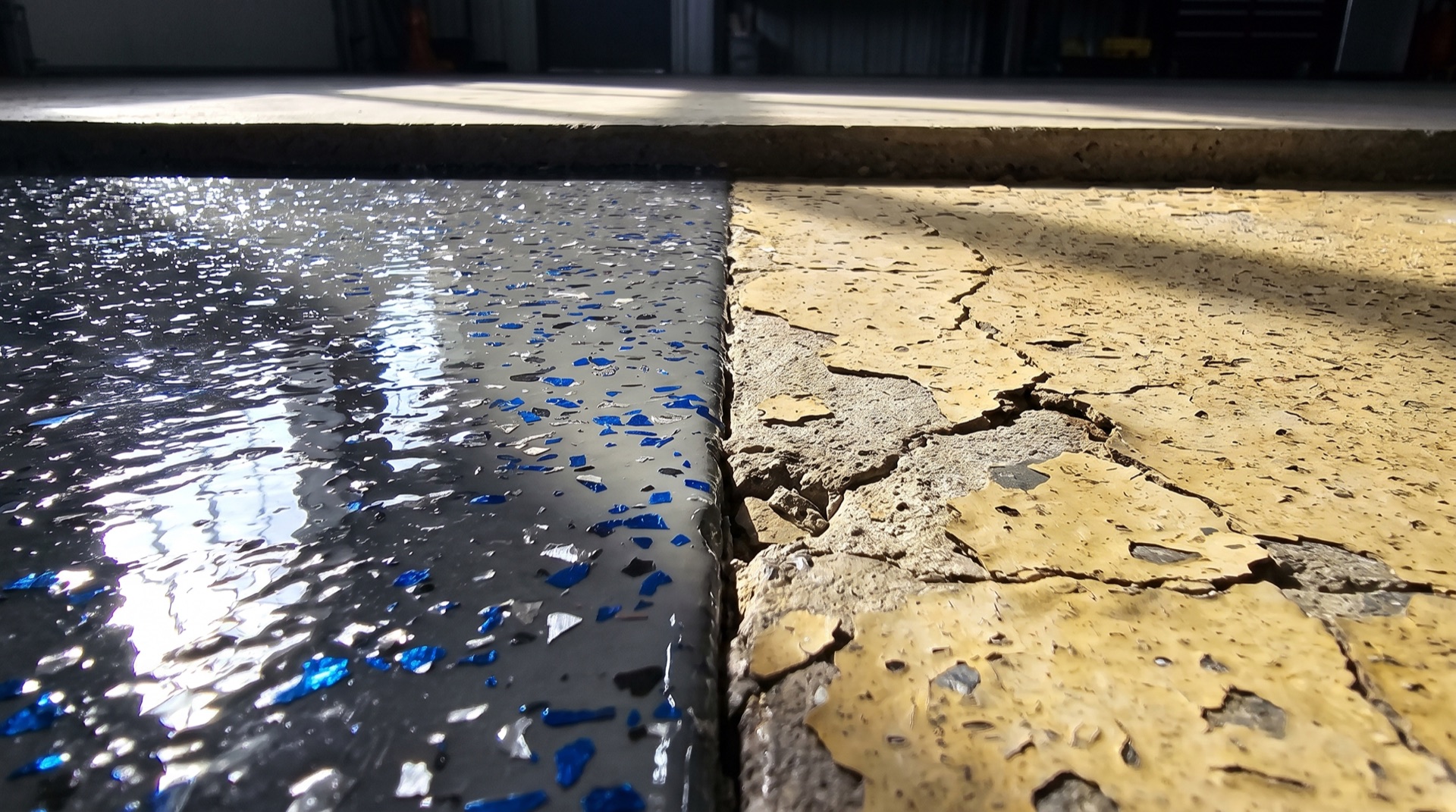
Same-looking floor, very different lifespan
"Epoxy" has become the generic word for any garage floor coating — but the resin you actually put down matters enormously in Northeast Florida. The difference between a floor that looks great for 20 years and one that yellows, bubbles, and peels in two summers usually comes down to two things: the prep, and whether the top coat is UV-stable. This page covers the second one. (For prep, see our garage floor coating breakdown and grinding vs. acid etching.)
Here's the honest version, without the sales gloss: epoxy is a genuinely good product in the right place. But Jacksonville throws UV, humidity, and 95° hot-tire heat at your slab, and that's exactly where standard epoxy struggles.
Side by side
| Factor | Epoxy | Polyaspartic (over polyurea) |
|---|---|---|
| UV & yellowing | Chalks and yellows in sun — poor outdoors | UV-stable, holds color indoors and out |
| Cure / return to service | 24–72 hrs between coats and before parking | Walk in hours, drive in ~24 hrs — 1-day install |
| Hot-tire pickup | Can lift if prep or thickness is off | Bonds deep, shrugs off hot summer tires |
| Humidity / moisture tolerance | Sensitive during cure; slower window | Cures fast in a wider temp/humidity range |
| Abrasion & chemical resistance | Hard, very chemical-resistant | Excellent; slightly more flexible finish |
| Cost per sq ft | Lower material cost | Higher resin cost, faster labor |
| Best use | Interior-only garages, tight budgets | Pool decks, patios, driveways, sunny garages |
The system most pros actually installYou rarely have to choose one or the other. The strongest floors in Florida use a high-build epoxy or polyurea base coat (for adhesion and thickness) with a polyaspartic clear top coat (for UV stability and a one-day cure). You get epoxy's build and polyaspartic's weather resistance in the same floor.
When epoxy is still the right call
Epoxy isn't obsolete — it's just situational. It's a smart choice when:
- The floor is an interior-only garage that never sees direct sunlight, so yellowing isn't a factor.
- You want the lowest upfront cost and can live with a multi-day cure.
- You need a thick, high-build layer to level a rough slab — often as the base coat under polyaspartic.
When polyaspartic is worth the upgrade
Spend the extra when sun, speed, or Florida weather are in play:
- Anything outdoors — pool decks, patios and lanais, and driveways where UV would yellow epoxy.
- You need it back fast — a one-day install so you're parked by tomorrow.
- Hot-tire-prone garages where cars pull in blazing hot off the highway all summer.
The bottom lineIn Jacksonville, if the slab sees any sun or you want a one-day turnaround, go polyaspartic on top. Keep pure epoxy for interior-only, budget-first garages. Either way, the prep — diamond grinding and moisture testing — matters more than the resin brand on the bucket.